Indology in 90 seconds: Bill Mak
https://www.youtube.com/shorts/V4c7n1z7VyY

Bill Mak is Professor of History of Science, University of Science and Technology of China and Research Associate at the Needham Research Institute, Cambridge, U.K. His fields include the history of science in Asia, Buddhist translation, and Sino-Indian studies. He received his B.A. (Hons.) in Linguistics (McGill University) and PhD in Indian Languages and Literature (Peking University). He was Associate Professor at the Institute for Research in Humanities / Hakubi Center for Advanced Research, Kyoto University (2014-2019) and Ho Peng-Yoke Fellow of the Needham Research Institute, Bye Fellow of Robinson College, University of Cambridge (2019-2021).
For the past fifteen years, Mak has taught classical texts in Sanskrit and classical Chinese, and delivered over fifty public lectures on Asian cultures and premodern science in over ten countries, including Canada, the US, UK, Germany, France, Belgium, India, China, and Japan. His recent works include the co-edited volume Overlapping Cosmologies of Asia published by Brill, and over twenty articles in various academic and scientific journals. He is currently writing a book titled Foreign Astronomy in China, from the Six Dynasties to the Northern Song, to be published by Routledge and the Needham Research Institute in Cambridge, U.K.
curriculum vitaecontactmusic compositionart
990901 990518 970328c 970328b 970328a 031201cphryg 030501clyd 030409bell 030409 030401 030321B- 030316cmixolyd 030310c+ 030226C- 030215F- 030131F- 030127c+ 93Violin Prepared Piano improv 92Simvarisdn 92SIMVAR 92Conatum 92_93improv 91Trioimprov 91QuartetinF 91Preludef+ 91Draft 3rd mvt concerto for piano and 2 91butterfly 91Butterfly Island Dance Piece 91Atlantis 91Andantemysterioso 90Sacrament 90Newage 90Fugue1a 89Forjake 88twoandantino 88Firstimprov 88Diarye-
In English
Coomaraswamy, A. K. 1933. ‘Hindu Sculptures at Zayton’. Ostasiatische Zeitschrift 9: 5–11.
Ecke, Gustav, and Paul Demiéville. 1935. The Twin Pagodas of Zayton: A Study of Later Buddhist Sculpture in China. Cambridge, Mass.: Harvard University Press.
Gardner, Iain, Samuel N. C. Lieu, Kenneth Parry, and Macquarie University Ancient History Documentary Research Centre. 2005. From Palmyra to Zayton: Epigraphy and Iconography. Silk Road Studies 10. Turnhout, Belgium: Brepols.
Goodrich, L. Carrington. 1957. ‘Recent Discoveries at Zayton’. Journal of the American Oriental Society 77 (3): 161–65.
Guy, John. 1994. ‘The Lost Temples of Nagapattinam and Quanzhou’. Silk Road Art and Archaeology 3: 291–311.
———. 2001. ‘Tamil Merchant Guilds and the Quanzhou Trade’. In The Emporium of the World. Maritime Quanzhou 1000-1400, edited by Angela Schottenhamer, 283–308. Leiden: E. J. Brill.
Lieu, Samuel N. C., Lance Eccles, and Majella Franzmann. 2012. Medieval Christian and Manichaean Remains from Quanzhou (Zayton). Corpus Fontium Manichaeorum. Series Archaeologica et Iconographica ; v. 2. Turnhout : Macquarie University, NSW, Australia: Brepols ; Ancient Cultures Research Centre.
Steinhardt, Nancy Shatzman. 2013. ‘Medieval Christian and Manichaean Remains from Quanzhou (Zayton), Corpus Fontium Manichaeorum Series Archaeologica et Iconographica. By Samuel N. C. Lieu, Lance Eccles, Majella Franzmann, Iain Gardner, and Ken Parry. Pp. x, 282. Turnhout, Brepols, 2012’. Journal of the Royal Asiatic Society 23 (1): 146–48. https://doi.org/10.1017/S1356186312000739.
中文
宁志新. 1996.〈唐代市舶使设置地区考辨〉.《海交史研究》2: 70–75.
吴文良. 1957. 《泉州宗教石刻》. 北京: 科學出版社.
鄭振滿. 2003. 《福建宗教碑銘彙編. 泉州府分册》.第1版. 福州市: 福建人民出版社.
陈立献. 2014. 《泉郡碑刻百篇譯注》. 第1版. 北京: 中国文联出版社.

[Research Summary 2021 (PDF, 24.9 MB)]
8. Evidences for Early Indian and Buddhist Presence in South China Re-Examined — The Case of Pui To in Tuen Mun. (Mapping South China and the Maritime Silk Roads — ISF Chinese Research Center Research Seminar Occasional Papers, 2024) (PDF)
7. Sanskrit Uṣṇīṣavijayādhāraṇī Inscriptions in Dali/Yunnan. (Investigating Principles: International Aspects of Buddhist Culture – Essays in Honour of Professor CHARLES WILLEMEN, 2019) (PDF)
6. The Buddhist transmission of Grahamātṛkādhāraṇī and other planetary astral texts. (Pacific World, Third Series, number 20, 2018) (PDF)
5. [Newspaper article] Une incantation magique déchiffrée du sanskrit. (La Libre Belgique. 4 Mai, 2016). [Article on the decipherment of the Yunnan Sanskrit tablets from the Pairi Daiza Collection] (JPG)
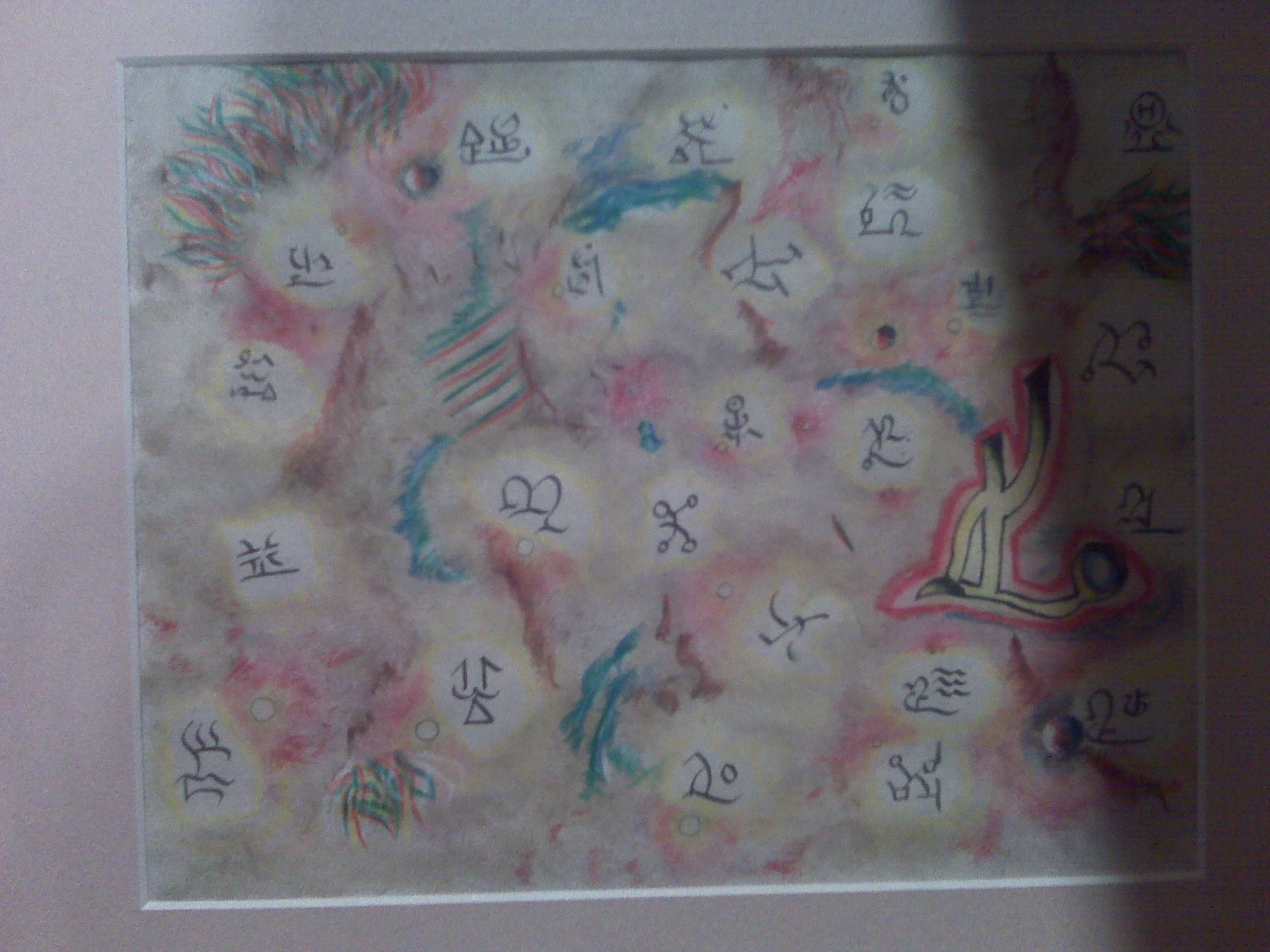
4. 仏教マントラの中国化の一例—普庵咒における悉曇字母について (The Siddham Alphabet in the Mantra of Pu’an – A case of sinicization of Buddhist mantras) (東方学報 88, 2013) (PDF)
3. Hermeneutic and Polemical Tradition of Late Mahāyāna Buddhism: Citations and hypothetical arguments in Haribhadra’s Abhisamayālaṅkārāloka (Ch.30-31) (Vijjāvimutti. Singapore: Buddhist and Pali College of Singapore, 2013) (PDF)
2. Haribhadra’s commentary (Abhisamayālaṅkārālokā) on the Story of Sadāprarudita (Ch. 30-31 of Aṣṭasāhasrikā Prajñāpāramitā) – Sources and Construction of a Mahāyāna Soteriology (Ñāṇappabhā: Ven. Pategama Gnanarama Felicitation Volume, 2011) (PDF)
1. Kumārajīva and Prajñāpāramitā in China (Kumārajīva : Philosopher and Seer, 2011[2015]) (PDF)
10. Interview with Prof. Huang Baosheng (in Chinese). 梵語巴利語專家黃寶生老師專訪 [上] [下]
9. Interview with Prof. Wang Bangwei (in Chinese). 訪談:王邦維教授教的教學生涯與教學理念 [上] [下]
8. Theravāda Buddhism as part of the Buddhist Revival in Mainland China and Hong Kong – Two Paradigms. (Buddhist Revival in Asia, 2015) (PDF)
7. The Career of Utsuki Nishū 宇津木二秀 in Hong Kong during the Japanese Occupation Period (1941–1945) (Journal of the Royal Asiatic Society Hong Kong Branch, 2015) (PDF)
6. 緬甸禪修札記 (佛門, 2013) (PDF) / A Meditation Retreat in Myanmar (Buddhistdoor, 2012) (read here)
5. Theravāda Teachings and Buddhist meditation Training in Hong Kong (International Journal for the Study of Humanistic Buddhism, Issue 3, 2012) (PDF)
4. Reflections on Confession of a Buddhist Atheist (Stephen Batchelor) (Buddhistdoor, 2011) (read here)
3. My Journey as a Buddhist by Dr. Bill M. Mak (Buddhistdoor, 2010) (read here)
2. Synergy or Collision: University students encountering Buddhism in China (Buddhistdoor, 2007) (read here)
1. Ehi Passiko in the Pluralistic World: Challenges and Opportunities of Buddhism as a World Religion in the 21st century (和谐世界从心开始:首届世界佛教论坛文集·征文获奖卷, 2006) (PDF)
1. Indological Studies in Hong Kong and China — Past and Present. (Prajñā, Consulate General of India (Hong Kong & Macau SARs), 2024) (PDF)

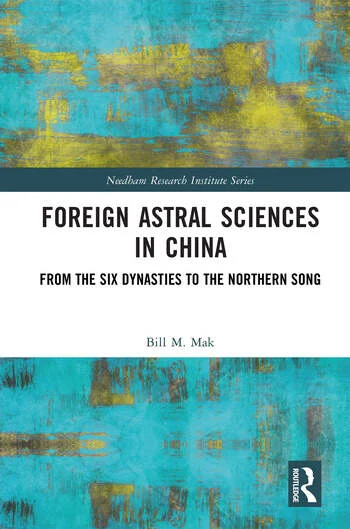
25. Foreign Astral Sciences in China——From the Six Dynasties to the Northern Song (Needham Research Institute Monograph Series, 2026)
24. From Zero to Infinity — China’s Encounter with Indian Mathematics (Inner Asia, 2024)
23. Persian Astronomy in China (The Medieval History Journal, 2024)
22. Yavanajātaka [with new dating] (The Encyclopedia of Ancient History: Asia and Africa, 2023) (PDF)
21. The First Two Chapters of the Paitāmahasiddhānta (SCIAMVS 21, 2021/2022)
20. Greek Astral Sciences in China (Overlapping Cosmologies in Asia, 2022, pp. 45-74, link)
19. Greco-Indian Astrological Theories on Conception and Childbirth — Chapter 3 & 4 of Mīnarāja’s Vṛddhayavanajātaka (Body and Cosmos, 2021, pp. 369-407, link)
18. Bhaṭṭotpala and Scientific Learning in Tenth Century Kashmir (Journal of Indological Studies, 2018-2019) (PDF)
17. Vedic Astral Lore and Planetary Science in the Gārgīyajyotiṣa (History of Sciencein South Asia, 2019) (PDF)
16. 『仏国暦象編』におけるインド天文学について [The Indian Astronomy in the Bukkokurekishōhen] (co-authored with Masahiro Ueda, East-West Encounter in the Science of Heaven and Earth 天と地の科学—東と西の出会い, edited by Tokimasa Takeda and Bill M. Mak, 2019) (PDF)
15. Greco-Babylonian astral science in Asia – Patterns of dissemination and transformation (East-West Encounter in the Science of Heaven and Earth 天と地の科学—東と西の出会い, edited by Tokimasa Takeda and Bill M. Mak, 2019) (PDF)
14. Esoteric Buddhist Astrology – The Japanese Sukuyōdō school of Indian Astrology. English translation of 密教占星術 Mikkyō senseijutsu by Michio Yano. New Delhi: Aditya Prakashan, 2019.
13. The Oldest Extant Source on the Indian Lore of Nakṣatras According to Vṛddhagarga (Conference Handout, 2018) (PDF)
12. The First Two Chapters of Mīnarāja’s Vṛddhayavanajātaka (Zinbun 48, 2018) (PDF)
11. Tithikarmaguṇa in Gārgīyajyotiṣa – Tithi worship according to a number of early sources (Journal of Indian and Buddhist Studies 66:3, 2018) (PDF)
10.《古代中國與日本的“異域天學”:七曜日與天宮圖星占術》[The foreign astral science in medieval China and Japan – Seven planetary weekdays and horoscopy] , in《中印关系研究的视野与前景》, 2016. (PDF)
9. Astral Science of the East Syriac Christians in China during the late first millennium AD (Mediterranean Archaeology and Archaeometry 16-4, 2016) (PDF)
8. Indian Jyotiṣa Literature through the Lens of Chinese Buddhist Canon (Journal of Oriental Studies 48-1, 2015 [2012]) (PDF)
7. The Transmission of Buddhist Astral Science from India to East Asia – The Central Asian Connections (Historia Scientiarum 24-2, 2015) (PDF)
6. Yusi Jing – A treatise of ‘Western’ astral science in Chinese and its versified version Xitian yusi jing (SCIAMVS 15, 2014)
5. The ‘oldest Indo-Greek text in Sanskrit’ revisited – Additional Readings from the Newly Discovered Manuscript of the Yavanajātaka (Journal of Indian and Buddhist Studies 印度學佛教學研究 LXII No.3, 2014) (PDF)
4. The Last Chapter of Sphujidhvaja’s Yavanajātaka critically edited with notes (SCIAMVS 14, 2013) [excerpt only] (PDF)
3. Silk Road Transmission of Astrological Lore to China – Indian, Chinese and Central Asian elements in Mahāsaṃnipātasūtra (T397) (Silk Road: Interwoven History) (forthcoming)
2. The Date and Nature of Sphujidhvaja’s Yavanajātaka reconsidered in the light of some newly discovered materials (History of Sciencein South Asia, 2013) (PDF)
1. La stela scio de antikvaj popoloj – de Grekio ĝis Ĉinio [“The astral knowledge of the ancient peoples – from Greece to China”] (Kontakto, 2012) (PDF)
– Overlapping Cosmologies in Asia, edited by Bill M. Mak and Eric Huntington. “Crossroads – History of Science and Technology across the Silk Roads” series. Leiden: Brill, 2022. doi: https://doi.org/10.1163/9789004511675
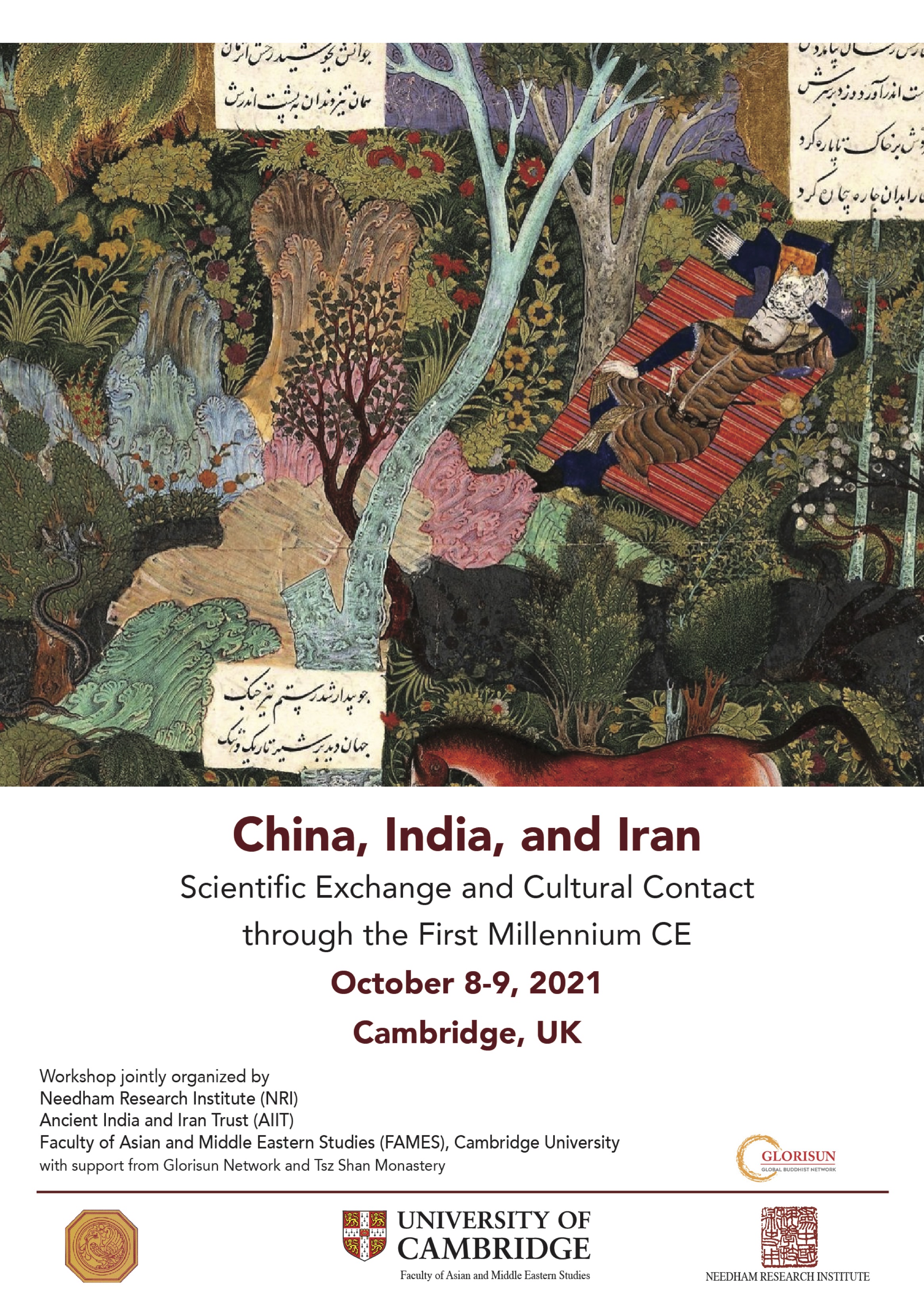
– Workshop: China, India, and Iran: Scientific exchange and cultural contact through the first millennium CE. 8–9 October, 2021, Cambridge. (Poster, Report, INDIRA 15)
– Academic network, Conferences, Panels, 2016-2021 (PDF, 7.2 MB)
– 仏教天文学研究会(京都大学人文科学研究所)Buddhist Astronomy Research Seminar (Monthly meeting at Kyoto University, 2003-2019). (In Japanese)
– Proceedings of the International Conference “Traditional Sciences in Asia 2017 — East-West Encounter in the Science of Heaven and Earth 天と地の科学—東と西の出会い, edited by Tokimasa Takeda and Bill M. Mak, 2019) (PDF1, PDF2, 98.2 MB)
– Sources of Buddhist Astral Science: Amoghavajra’s Xiuyao jing and Entsū’s Bukkokurekishōhen. The Robert H. N. Ho Family Foundation Grants for Critical Editions and Scholarly Translations (2019).

11. Magical Alphabet in the Indian and Chinese Minds – From the Garland of Letters to Master Pu’an’s Siddham Mantra (Brahman and Dao: Comparative Studies of Indian and Chinese Philosophy and Religion. Studies in Comparative Philosophy and Religion series, 2013) (PDF) [excerpt]
10. 梵語點滴:緣與緣分 Pratyaya and Yuan/Yuanfen (佛門, 2013) (PDF)
9. 衛塞 Wesak (明覺, 2011) (PDF)
8. 悉曇拾趣:bhaḥ (明覺, 2011) (Read Here)
7. 如來 Tathāgata (明覺, 2011) (Read Here)
6. 金剛 Vajra (明覺, 2011) (Read Here)
5. 般若 Prajñā (明覺, 2011) (Read Here)
4. 悉曇拾趣:aḥ 和 hūṃ (明覺, 2011) (Read Here)
3. 悉曇拾趣:清水寺的悉曇字母 - pra、stryi和金剛界種子字 (明覺, 2011) (Read Here)
2. 悉曇拾趣 (明覺, 2011) (Read Here)
1. 梵语名词复合词的分析-以依主释(偏正复合词)为中心 [“An Analysis of Sanskrit Complex Nominals – with focus on Tat-puruṣa (determinative) compounds] (语言学研究, 2009) (PDF)
10. Lernado kaj instruado de Esperanto en Azio — Kiel fluparoli kaj fluparoligi la aliajn? (Kajero de ISOA 4, 2014) (link)
9. Leteroj de Tigro (7): Ĉu Japanio plaĉas al eksterlandanoj? (Ponteto, 2013) (PDF)
8. Leteroj de Tigro (6): Identeco kaj Naciismo (Ponteto, 2012) (PDF)
7. Leteroj de Tigro (5): Kion ni faru por Paco? – pri la surinsuliĝo de kelkaj honkonganoj (Ponteto, 2012) (PDF)
6. Leteroj de Tigro (4): Tagoj de demonstracioj (Ponteto, 2012) (PDF)
5. Leteroj de Tigro (3): Ĉina-japana rilato en Honkongo (Ponteto, 2012) (PDF)
4. Leteroj de Tigro (2): Fino…aŭ komenco? (Ponteto, 2012) (PDF)
3. Leteroj de Tigro (1): Reciproka lernado kaj klera ligo inter Ĉinio kaj Japanio (Ponteto, 2012) (PDF)
2. Recenzo (Gunnar Gällmo): Laŭ la deziro de la Budho mem (Beletra Almanako, 2009) (PDF)
1. Okcidenteco en la cina lingva medio: akcepto kaj rezisto [“The concept of the ‘West’ as reflected in Chinese Language media: Acceptance and Resistance”]. (Japana Esperantologio, 2008) (PDF)
1. 語音學入門 Introduction to Phonetics (under construction)
2. 論語英譯導讀 English translations of the Analects (under construction)
3. 莞香與香港史 Aquilaria and the Origin of Hong Kong
4. 泉州參考文獻 Quanzhou Selected Bibliography
https://www.youtube.com/shorts/V4c7n1z7VyY
Berlin, Germany (Max Planck Institute for the History of Science): 23 Mar, 2026
Cambridge, UK (NRI): 24 Apr, 2026
Hong Kong, China (Hong Kong Space Museum): 12 Sep, 2026 [in Cantonese 粵語演講]
德國柏林(馬普所):2026年3月23日 [線上線下]
英國劍橋(NRI):2026年4月24日 [線下聚會]
中國香港(香港太空館):2026年9月12日 [粵語進行]
https://www.routledge.com/Foreign-Astral-Sciences-in-China-From-the-Six-Dynasties-to-the-Northern-Song/MMak/p/book/9781138477599
Some months ago, my Indian colleagues asked me to write an article commenting on the (non)response of local Chinese Buddhists to the planned auction of the Piprahwa gems in Hong Kong earlier this year. The gist of my paper is that contact relics, such as the Piprahwa gems, are not considered the same as the Buddha’s bodily relics. Without a continuous history of worship, they are just archaeological discoveries of antiquarian, not spiritual, interest.
My questions, however, turned to India: How should contact relics such as the Piprahwa gems be returned to the Buddhist communities? Since the Peppé family received from the British colonial government only 20% of the gems, what happened to the remaining 80% retained by Indian museums?
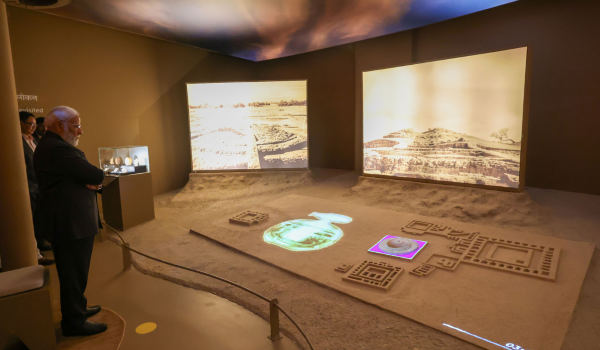
PM Modi inaugurates Grand International Exposition of Sacred Piprahwa Relics related to Lord Buddha
The Delhi exposition may preempt some of these tricky questions from the Buddhist communities.
Leave a Reply
You must be logged in to post a comment.